

10 Med Spa Client Retention Strategies That Make It Easier to Book the Next Visit
By PracticeQ Team
A first appointment can be the start of a long patient relationship—or the last time someone visits your med spa. Treatment results matter, but so do the everyday details: Was booking simple? Did the patient know what to expect after treatment? Did anyone explain when a follow-up might be appropriate?
Retention does not mean pushing every patient toward another appointment. It means removing avoidable friction and making it easy for people to return when a treatment plan calls for it. Here are 10 practical ways to improve that experience, with software taking care of the repeatable work.
1. Make rebooking part of the checkout conversation
Before a patient leaves, explain the recommended follow-up timeframe and offer to reserve a visit. If the patient wants to decide later, give them a direct booking option. The important step is a clear, clinically appropriate next action—not a generic sales pitch.
2. Send reminders that help, not overwhelm
Set up appointment confirmations, a well-timed reminder, and a straightforward rescheduling option. After a visit, send treatment-specific care instructions through an appropriate communication channel. Keep operational messages separate from marketing campaigns and follow applicable privacy and consent requirements.
3. Use treatment history to personalize the next visit
A returning patient should not need to repeat every preference or explain their treatment history from scratch. Record goals, services, products discussed, provider recommendations, and documented results in a centralized chart. Review the record before suggesting a follow-up or complementary service.

A documented consultation helps staff continue the conversation at the next visit.
4. Keep the products and supplies patients need in stock
A stockout can disrupt a scheduled treatment or prevent a patient from purchasing an agreed-upon post-treatment product. Track inventory levels, usage, and expiration dates; establish reorder thresholds; and review the items most often needed for upcoming appointments.
5. Create timely, relevant outreach
Rather than sending every patient the same discount, tailor outreach to the reason for contact: a maintenance interval, an unused package session, a requested product update, or a birthday greeting when the patient has opted in. Relevance matters more than message volume.
6. Let patients book and complete forms online
Online scheduling allows patients to book when the front desk is closed. Digital intake and consent workflows can also move administrative tasks out of the waiting room. Check that patients can easily find the booking link, understand the available appointment types, and contact staff when they need help.
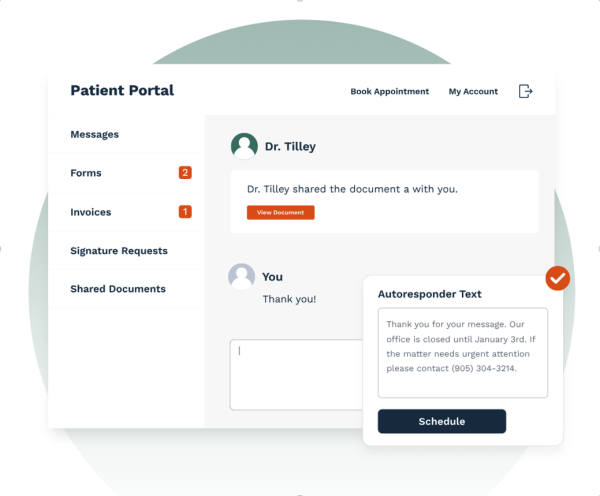
A patient portal can bring scheduling, forms, and messages into one place.
7. Make package and membership benefits easy to understand
Keep remaining sessions, benefit balances, renewal dates, and payment status visible to staff. Send reminders before benefits expire or payments require attention, and explain cancellation and rollover terms in plain language. A membership should support appropriate care—not guarantee a treatment regardless of clinical need.
For program design considerations, read PracticeQ’s med spa membership guide.
8. Ask for feedback while there is still time to act
A brief post-visit survey can uncover problems with wait times, communication, or aftercare instructions. Route concerns to someone who can respond and document what changed. A patient who raises an issue directly is giving the practice a chance to improve the experience.
9. Manage reviews with patient privacy in mind
Invite feedback through a neutral, consistent process instead of only approaching patients who seem happy. Respond professionally to public reviews without confirming that someone received treatment or disclosing personal health details. Address specific concerns privately when appropriate.
10. Measure whether patients actually return
Track repeat-visit and rebooking rates, missed appointments, package completion, and membership renewals. Review these measures by service or patient cohort where possible: someone receiving a one-time procedure will have a different expected return schedule from someone following a recurring skin-care plan.
A useful starting metric: Quarterly retention rate = ((clients at end of quarter − new clients acquired) ÷ clients at beginning of quarter) × 100. Define “active client” consistently, then compare the same measure over time.
Choose one gap to fix first
Start by reviewing a sample of recent first-time patients. Did they receive a clear next step, useful aftercare information, and a convenient way to book again? Identify the handoff that breaks most often, assign someone to improve it, and review results after a month.
Connected tools can help teams manage scheduling, records, forms, and patient communication without relying on memory or manual follow-up. Explore PracticeQ’s med spa practice management software or start a free trial to see how these workflows could fit your practice.
