

A Med Spa Owner’s Real-World Guide to AI Employees: Podcast Transcript
How many patients are already in your system, just waiting for the right reason to come back?
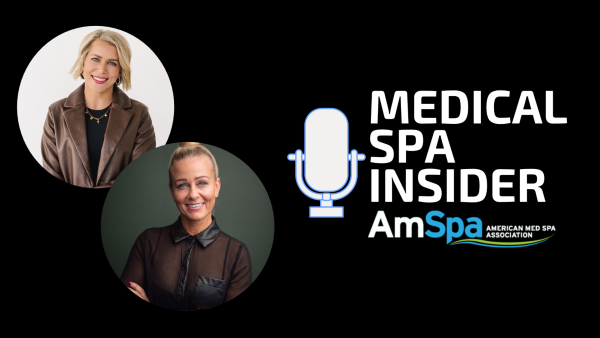
In this episode of Medical Spa Insider, AmSpa founder and chairman Alex Thiersch talks with Shannon Blake of Podium and Traci Andreason, FNP-C, owner of Rise Rejuvenation Center and founder of Injector’s Guide. They discuss how AI employees are changing the daily work of running a med spa.
Blake explains why Podium rebuilt its platform as an all-in-one system with a built-in EMR. She also shows how Operator, Podium’s AI business manager, finds revenue opportunities hidden in practice data. Andreason describes what it was really like to put AI to work at Rise, from the nerve-wracking first weeks to the point where AI became one of her best employees. Both agree on one lesson: buying technology doesn’t create efficiency unless you commit to training it and using it.
Topics include:
- Ending the tech stack shuffle
- From Avery to Operator
- Training AI to know your practice
- Revenue mining from existing patient data
- AI-powered provider reviews and call coaching
- What implementation really takes
Watch the full episode on YouTube or listen on the Medical Spa Insider podcast page. The full transcript is below.
Transcript
Welcome and introductions
Alex Thiersch: Welcome to the podcast, the program. This is Medical Spa Insider. My name is Alex Thiersch, and I have two of the most patient and technologically savvy women in the entire world: Traci Andreason from Rise Rejuvenation Center and the Injector’s Guide, as well as Shannon Blake from Podium. Welcome to the program, to you both. Thank you for joining.
Traci Andreason: Thank you.
Shannon Blake: Thank you for having us, Alex. It’s always a treat.
Alex Thiersch: So, so excited to have you both. We’re going to continue a trend that we’ve been talking about quite a bit this year, which is AI in the practice of medical aesthetics. Obviously, this is something that we’re all dealing with. There’s been a ton of advancement. There’s been a ton of trial and error and innovation, particularly on the part of Podium. I have to give Podium—I was going to say, as I said yesterday, but none of you have heard that yet—I have to give Podium a lot of credit, because Podium has really been one of the innovators, one of the leaders when it comes to artificial intelligence and bringing it to medical aesthetics, not just bringing it piecemeal.
There are a lot of vendors out there, and I’m certainly not trying to disparage any of them, because there are a lot that are doing amazing things. But a lot of them are attacking it one piece at a time, taking one bit of a problem and solving it. There have been a lot of great products. I love seeing this different innovation. It’s really cool to see what these things are doing. What’s been impressive about what Podium has been doing is you’ve really been taking a holistic approach and coming at it from wanting to solve the entire problem, really trying to build an entire system that will help the entire medical spa from soup to nuts, start to finish. Not only that, the entire investment that you all have made in the industry has been extraordinary. It’s been kind of fun to see. It’s been cool to watch.
Shannon, just to put you on the spot a little bit, what have the last couple of years been like at Podium with this massive shift in focus and investment in medical aesthetics? I can bet that a couple of years ago, when you all were sitting around, you did not think this would be the focus of your platform at this point.
Ending the tech stack shuffle
Shannon Blake: Certainly not. It has been a wild ride, but everything worked out the way it was supposed to, and we’re thrilled with where we’ve landed. Not that we’re by any means done, but yeah, you’re exactly right, Alex. When we got into this industry, we wanted to solely focus on helping these folks in speed to lead, helping with lead management, providing them with modern communication tools such as a phone system that’s connected up and integrated with their texting platform, and all things text marketing.
However, as AI has started to advance, we realized if we’re going to be able to execute on the AI employees that we know we need to build, Podium needed to be the full system. It also just made sense for us, because if you look at the industry and the technology that supported it today, there was a fragmentation problem. Even the current EMRs would tell you that, right? It’s no surprise, because the EMRs were not necessarily integrated with the CRM, and the phone systems that these practices were using were not integrated with their texting platform. It was just a lot of logins, a lot of wasted time.
It’s a really exciting time for aesthetics from a technology perspective, because yes, Podium is solving that by creating it all in one place, but I feel like we’ve triggered a lot of these other companies to have to level up. And to your point, Alex, there are a lot of folks in this space now—the EMRs specifically—that are doing some innovative things as well. So I think it’s just been good to level everyone up, and that’s what we’re excited about.
Alex Thiersch: Absolutely. I think that’s absolutely true. In this industry, we were kind of old and stodgy for a bit. We were based on dermatology and plastic surgery—nothing against them—but the technology was kind of antiquated. And we’ve really started to level up, not only with AI, but with everything. It’s become kind of a wholly different industry.
Traci, I think that’s a great segue to what we’re going to talk about. First of all, for those who don’t know you and your practice and what you’re about, I’d love to get just a quick little TikTok version of what you do, what your med spa is like, what your specialty is, if anything. And then a little bit about your Injector’s Guide as well, because I think that’s a really cool thing that you’ve developed.
Traci Andreason: Yeah, awesome. Well, I’m so excited to be talking about AI, first of all, so thanks for having me on for that. But definitely, [I’ll] give you a little rundown. Rise Rejuvenation Center is the name of my practice. It has been four years now, which is so crazy, but I’ve been an injector in this space for 10 years and got my start in plastic surgery. And it’s funny, that’s exactly what you’re talking about. The EMR we were using was made for plastic surgery, and then I noticed, “Oh, that’s what med spas are using, too.” Kind of crazy.
My practice now has 16 employees, and we specialize in the holistic approach. So we do all the wellness, regenerative medicine. We do fillers, Botox, standard injectables, and lasers and lights and all that fun stuff.
One thing that’s unique about Rise is that our biggest marketing platform is social media and television. Many people have seen us on Secret Lives of Mormon Wives, which is so fun. So I’m excited to also talk on that, because I know social media is big for a lot of people in our space, and it’s important for marketing, important for injectors and business owners.
And then Injector’s Guide was, let’s see, founded in 2018. I was in the industry for a couple of years at that time and realized there was a huge gap for beginner injectors to be confident, skilled injectors. I felt like what made someone experienced was time, and I thought that was really scary. I thought there should be courses in place and education in place that was easy to access for anyone. So I have a virtual library of courses, and I also developed my number-one hit, which is Color Me Injected. It is an anatomy coloring book. It’s basically like a cadaver lab on paper. It is an extremely accessible, easy, fun, exciting way to learn anatomy and for our injectors to be safer and more effective with what they’re doing.
Alex Thiersch: Yeah, it’s so cool. We’ve given it away at a couple of our events, and I think it’s such a cool way to learn. I’ve got four or five of those pictures hung on my wall and framed. They’re not very good, but they’re getting better. I’m going to keep trying.
Traci Andreason: You put it on the fridge when you really nail it.
Alex Thiersch: That’s right. That’s right. I’ve got some work to do. But getting into what we’re going to talk about: When Shannon and I were talking at the beginning, the technology has elevated, and what Podium is doing, I think, is elevating the whole industry. You’ve been—starting back in plastic surgery, which is one track that a lot of… And you’re a nurse practitioner?
Traci Andreason: That’s right.
Alex Thiersch: That’s the way a lot of nurse practitioners and other providers have come into it—not all, but a lot of them. But since you’ve been in the industry for a bit, talk a little bit about what some of the business challenges are right now versus maybe what they were a while back, and how you’re starting to use a product like AI, like Podium, like their new Operator system, to start [to] solve those. Because it’s really, really a different world.
Just by way of reference, I remember going back to VCS, the Vegas Cosmetic Surgery show, back in 2017 or whatever, and we were talking about data and all these KPIs for marketing, and it all sounded very good. There were some reports that you could pull from some of your software, but it really was difficult to get all these things together. I’m just curious to see what your thought is of how it’s changed over the years, how you’re using it now, and what your perspective is.
Traci Andreason: Yeah. Technology is unrecognizable, I’d say. Don’t you think? What were we doing?
Alex Thiersch: I don’t know how we did anything, to be honest.
Traci Andreason: I know. The efficiency—I’m like, what? Even the charting. I mean, everything. I feel like I’m a superhero. I can do so much more now with my time.
Definitely, I think one of the big challenges that comes up, aside from just changing tech and staying up to date on that, is: Why do we want better tech in our businesses? I think a lot of people listening could probably agree that software can be the biggest headache of running a med spa, because—probably [in] any business—you want to have basically limitless flexibility in your ability to execute on things with your software when it runs so much of your business. And you want it to perform exactly how you want it to perform. I believe a really good business is nuanced. [You] should not be able to copy and paste one system to another.
So I think that’s a challenge—to differentiate in a market that is becoming increasingly more competitive. Within five miles of my practice, we’ve got 20 competing practices, probably, or more. So the level of innovation, and I think marketing and patient retention and rebooking—all of that comes into trying to scale in a busy market. And then of course we have the economy playing a role, where people are maybe being more choosy with their spending. So at the end of the day, what we’re trying to be successful with is maximizing retention, rebooking and lifetime patient value, and utilizing tech and AI to help us reach those goals. That efficiency, that speed to lead, all those different things that will help us capture those in such a competitive market, is important.
From Avery to Operator
Alex Thiersch: Yeah. And you have to use it, too. That’s the big thing that I always struggle with with technology. It’s great—we have this new system, it does all these cool things—but I still have to be able to use it and train on it and implement it into my system.
Shannon, let’s talk about the evolution of where we are right now with Operator, which is the new AI. I think you call it an AI employee, right?
Shannon Blake: AI employee, AI business manager. Yeah.
Alex Thiersch: Because you’ve had Avery, which is the front desk scheduling coordinator, and that’s been really cool. It’s done a ton of cool things. We’ve seen it in action. You’ve now developed this next step, which I think is the natural iteration, but it’s also, I would say, probably the most difficult. Talk about what you’re trying to solve with that. The process for that must have been really, really tough. I’m so curious to hear your thoughts about what Operator is, how it works and what it’s going to do to change the industry.
Shannon Blake: Yeah. And I’ll just say, for folks listening who are less familiar with Avery: We built our first AI employee, Avery, about three years ago. So she’s been clocked in and working hard and answering questions about treatments for three years now, so we’ve really perfected her. It doesn’t mean that you don’t have to train her. There’s a lot of upfront training, because she needs to understand your practice: how you like to speak about your services and treatments, what your cancellation fees are, what your new-member discount is, how you want to speak about pain tolerance and all those things, right?
We wanted to build Avery to solve speed to lead, like Traci was saying. With the industry as competitive as it was, you needed a solution that could have humanlike conversations with your leads 24/7 and even book the appointment for you. So we really perfected Avery. And then, fast-forward, we wanted to keep on building AI employees that we thought this industry needed.
I know that for more and more practices, it hasn’t been as easy to grow and be profitable, just with everything going on with the economy. So it was perfect timing for us to build Operator. Our thought with Operator was: Traditionally, in EMRs, you’ve got a lot of data. You have a lot of past client data. You have a lot of lead data. You’ve got details on who’s canceled appointments, who hasn’t rebooked, what treatments so-and-so lead or client showed an interest in but never booked. It’s all been there in the EMR, because the EMR is the payments, because they’re the scheduler. They had all of that data. They have all the charts and information, right? But we realized it’s really difficult for aesthetic practices to gain those insights in a scalable way and in an effective way.
So we thought, “You know what? We’re going to do a big thing, and we’re going to build an entire EMR inside of our platform, and we’re going to have these AI employees sit at the center of the technology.” So it’s all built in-house, and that will allow Operator to be asked anything about the practice and to be able to serve up to you those insights.
So it’s not just being able to ask it, “Is my rebooking rate up or down from last week? What’s my utilization rate for the week?” That’s all interesting to know, and it does solve for the EMR not having maybe the exact static report that you want to look at, because now you can ask Operator anything and it can serve it up to you in a custom way. But we really wanted something that could dig into the database and surface revenue opportunities.
That was what got us really excited, because we’re like, “There’s no time like right now.” Practices need this now more than ever, because it’s not as easy. It’s not just automatic growth by owning a med spa. It takes a lot of work. And retention is not 100% in this industry. Alex, you would know better than anyone. Does it sit around 50% or 60% for repeat clients, right? Yeah. So what about that other 40%? I know that everyone is wishing they could do it in a more scalable way—making sure people are coming back—and Operator really allows you to be able to do that in an easy way.
Alex Thiersch: Yeah. First of all, kudos to you all for biting that off, because I remember when we had this conversation, when you all started on this journey, I was blown away that you were doing it, just because there are a lot of ways to tackle what you guys were doing. And I thought, number one, it’s brave, it’s innovative, and I think it shows faith in the industry as well. Because what you did is say, “OK, instead of doing piecemeal, we’re going to take what the industry is doing, what it’s built already.” Instead of just piecing it together like a Mr. Potato Head, like we’ve kind of done in the past, you’re going to take it and really build it from scratch and allow something to function really from the bottom up. And that’s risky, because you’re asking folks to transfer everything over to your product.
What’s the response been so far? We’ll ask Traci in a second. We’re going to go ahead and mute her so she can’t hear your answer here. It must have been nerve-wracking rolling that out at first. I mean, it’s an amazing product—I’ll just say that from the beginning, to kind of bury the lede a little bit. But what’s been the response so far with that?
Shannon Blake: Very nerve-wracking. We weren’t sure what that was going to do from a sales perspective, because we actually made an even bigger and tougher decision: that we were no longer going to sell Podium as what Podium used to be. You now have to purchase the entire platform. So we were like, “If this doesn’t go well, we’re basically screwing ourselves on the sales side,” which was really scary.
But I’m happy to report we have continued to average about 75 new practices every month signing up for Podium. The response has been overwhelmingly positive. I think people were just hungry for one system. Instead of your tech stack being four or five different systems, it’s now just Podium. It’s so much easier for the front desk, because they’re not having to navigate multiple different systems. The front desk loves it because it’s just one sign-in, one platform. Everything’s in one place. And then you layer on the AI employees who are helping you in speed to lead and also giving you those data insights on anything you want to know about your business.
People have been hungry for something innovative. This is a very modern industry, and we didn’t have modern technology for it the way that this industry deserved.
Now, with that being said, we rolled this out in January, and I’d be lying if I said it’s just been smooth sailing and we have everything built that everyone needs. Not the case. What I will say is I’m very proud that we are a company whose product team literally builds this with our clients. Trace can attest to this—the amount of time that Rise’s team has spent with our product team to give feedback and help us understand flows, and really just wish-list items, where people are like, “I haven’t had this in another EMR, and we would love to finally have it.” We love building with our clients. We do not build a single thing without it being the consensus: “This is what people are needing.” It’s not one-off stuff. It’s, “This is a highly requested feature. We’re going to build it for the people.”
Alex Thiersch: Yeah. So, Traci—backing up a little bit—I’ve heard this from lots of folks: the tech stack thing, different pieces not talking to one another, having your EMR and then your CRM and all the different stuff. Was that an issue for you? What’s the response been so far? And then I do want to get into Operator itself and how it’s been working. What’s been your reaction so far?
Traci Andreason: Well, it’s funny you talked about VCS, because that’s actually the first time I went to a conference, and I think it was that year, 2017. It was at that conference that I was talking to colleagues, and I remember that being a common topic: Software is so frustrating in this space. Everything’s convoluted, and the companies that are doing well are just tech stacking in their own system, and everything’s a little bit archaic or convoluted. And I remember at that time thinking, “If I was really tech-savvy, I would just start a software company and just do it right.” And now, when I’m thinking about Podium, I’m like, “It’s about damn time,” because that was almost 10 years ago.
So the reception for me was great, because I just think it’s been a nagging concern and frustration point—pain point—for business owners in the med spa space, or even just providers. And having a company that is so innovative, like you were saying earlier, is really fun. Because it felt like, there for a minute—and again, I’m not trying to dog on other companies either, because I do think there are a lot of great companies, but no one doesn’t like Podium—the problem is that these companies, I think, got comfortable with all of us hating software. And they’re like, “I mean, we all suck, but we’re the best of a bad pool of software.” That’s kind of what it started feeling like. No one had to innovate or do better, because nobody was doing better.
And I’ve noticed since Podium entered the space, everyone is doing better. All the companies that have been thriving previously in the med spa space have had to take a look at their software and innovate, too, because they can’t keep up with what Podium’s bringing to the table. So I think overall it’s been incredible for the industry just to have a really tech-forward company enter the space and innovate the space and make it basically impossible to stay in that stagnant, “mediocre is OK and we’re all just going to settle on hating our software” kind of vibe.
Alex Thiersch: Yeah, it’s so true. Because, Shannon, others have tried to do it before. It’s not like developing a new EMR is a new idea. Someone’s got to really, really want to do it and invest the type of time and capital and resources that it’s going to take to do it right.
Shannon Blake: Yeah, I think the ones who started their software a long time ago have a harder time, because yes, there’s new technology that makes it easier to build software, but you can’t build modern software in an old software. It doesn’t speak well. So the ones to really look out for are the newer, modern tech companies building from scratch. It worked out perfectly. We literally could not have timed it more perfectly: We were already modern tech, and now comes out AI that makes it so much easier to build technology and build it fast. So bless those EMRs that have just old tech. I feel like they just have to start over.
But there are some up-and-comers. I know you’ve met with Dakota Health. They’re making a run for it. I wish them luck. I will say, it is very expensive to do, and it’s very difficult. Even AI employees—it’s taken us a couple of years to get Avery dialed to where she is. But we’re just excited to see people taking on the challenge.
Training AI to know your practice
Alex Thiersch: So, Traci, let’s talk a little bit about how you utilize AI in your practice. You’re using Operator, which is this AI management, and it’s not just the speed-to-lead part, which is important. Because before, in order to determine where your quality leads were, what you should do as far as marketing or specials or whatever it is, you had to dig through all these reports. You had to have someone do that. It took time. It took effort. You had to have the right reports in the first place. Now the idea is you’ve got something in the background that can do that, or that you can simply ask, or that can have ideas kind of on its own. And then—correct me if I’m wrong—it can communicate with Avery, which is the kind of outbound thing, and can automatically communicate with the patients and start setting these things up.
I’m curious, though—let’s go back to the beginning. How did you start using this when it first came out? What was your initial, “Oh, we’re going to start doing it for this”? Because again, it’s great to have something, but I’ve got to use it, and I’ve got to use it in a way that’s going to be beneficial to the business. So how have you started doing that in day-to-day work to make your business more efficient?
Traci Andreason: Well, way back when I first implemented it—beyond ChatGPT and whatever; we were doing that from the jump—but as far as AI in the software we’re using, I introduced Avery when it basically got launched, because we had already been using Podium as our CRM. Then they came out with the AI, and I was like, “Oh my gosh, that would be nice—instead of an automation after hours, if they could actually talk to an AI who could answer questions.” And that speed-to-lead piece was obvious: “Oh, if I could even close two more people per month with this, it’s going to pay for itself.” The cheapest employee I’ve ever had—incredible value.
So that was equal parts easy to decide and absolutely terrifying, because that was our first patient-facing AI. It’s one thing to do AI in the background. It’s another to have it basically run parts of your business without you watching. So if a lead came in at 11 p.m., I’m like, “I hope… I don’t know. I guess I’ll wake up and see if the place is burned down to the ground.”
I’m a little bit of a control freak, and Shannon knows this. In the early days, I was so scared. I was texting her, like, “Turn it off!” Because you work so hard to develop a brand and a certain level of customer service and this standard of excellence. And I’m like, “I don’t know this Avery girl. I don’t know if she’s going to do what I want her to do.”
What I really learned over six to eight painful weeks of struggling with the excitement and the nerves was that AI is as good as you put the effort in for. When we really trained our AI to know our business—the nuances, how we want it to say things, what it can and cannot do—and put some of those boundaries in place… I know now Podium has learned so much from the earlier days, so that’s probably already—you could correct me, Shannon—but most of those probably are in there. But I just think a good business is nuanced. So the little things that make you you, you’ve got to teach your AI. And then you think about, “OK, we have a monthly staff meeting. If something comes out, we need Avery to know,” so that if someone asks a question about this event coming up…
So once I kind of got a good dial on that, she actually became one of our best employees, because she only makes the same mistake one time. Imagine if you could say that about humans. You train and say, “This is how I want it done,” and then it’s always done that way. It’s just mind-blowing.
So I think the piece of me that was a control freak really started to flip, like, “Oh, actually, this gives me more control. I can micromanage a system and continue to be kind and build a good culture with my people, not micromanage them.” So that was my entry into it—that little emotional roller coaster. And then I was like, “Oh my gosh, whatever Podium puts out AI-wise, I want to be on board,” because it was so transformative for our business.
Alex Thiersch: And are you still—I’m just so curious—do you still tell Avery please and thank you and “Oh my God, thanks so much for your help”? Because that’s what I’m always doing.
Traci Andreason: I firmly believe you use your manners with AI. If one day they take over the world, I want to be an ally, for sure.
Alex Thiersch: Yeah, for sure. For sure.
Revenue mining from existing patient data
Alex Thiersch: Now you’re introducing Operator, which—and again, this is just my take—would terrify me even more. Because yes, you’re dealing with patients. Yes, you’re dealing with speed to lead, all those things, which is vital—your brand. But into that, you’re introducing access to the blood and guts of your business—patient data, potentially. So the stakes are raised a bit, but also the reward is bigger. What can it do? That’s what I’m most curious about. For the average owner, in theory—and then maybe, Traci, you can give some examples in practice—what can it actually do?
Shannon Blake: Yeah, I love this question so, so much. I’ll share just a couple of examples, and then I’d love for Trace to share. These are the most common that I hear from practices and how they’re using Operator. We talk about revenue mining.
A couple examples of how people are using it are: “Send me a list every Monday of every client who had an appointment booked but never rebooked.” They canceled their appointment, but they didn’t rebook. That happens often in this industry, right? I know for me as a client, I’ll be scheduled for BBL Moxi, but then I’m like, “Shit, I have [to] speak on a podcast next week. I can’t look like that.” So I’ll cancel it, and I have every intention to rebook, but life gets busy and I can’t find the perfect date.
Operator is able to surface up to you, “OK, here’s everyone who canceled that didn’t rebook.” And then you’re able to say to it, “OK, I want you to curate a text for each of these that is tailored to whatever they were coming in for.” And then it will show you all the texts that it wrote and say, “Are you good for me to send these off to Avery?” for example. It sends to Avery. Avery texts them out and has the conversation with the patient, with an end goal of getting them on the calendar. And because Podium is now an EMR and we are the scheduler, Avery can do that all by herself. No human needs to get involved with getting them back on the books. So I would say cancellations are really popular.
Also: “Send me a list of Botox clients or neurotoxin clients that are past due on being in for their four months that are not already on the schedule.” Send me that list. “OK, great. I want you to send them to all but two—Mary and Jenny.” Maybe you know why you don’t want them to be texted. “Send a text to the rest of them. Let’s get them back on the books. Let them know that they’re a little overdue and when they were due.” So that’s another example.
Or, “Pull me a list of my members who have $500 or more in their piggy bank and don’t have anything on the schedule.” Let’s make sure they know that they’ve got money in the wallet and we would love to see them back in. Things like this.
So this is what we call revenue mining. There are people in your system that, if you just engaged with them strategically—not just, “Hey, how are you? Checking in,” but, “Hey, we noticed that you are overdue on your Botox. We’d love to get you in”—you know what I mean? It needs to be tailored, custom and sound human. So there’s Operator, who’s pulling the insights and curating the text, and then Avery, who’s going out and sending out the texts and having that conversation and getting them booked.
Alex Thiersch: Mm-hmm. And can it—taking a step back from that, even—it’s one thing to say, “All right, I want Botox patients who have maybe missed their appointment, or someone who’s due.” Can you take it a step further and say, “This is a light week for some reason. What are some ideas for filling this week up?”
Shannon Blake: Yes.
Alex Thiersch: And just say, “Look at everything,” and it’ll be like, “All right, well, these folks are due for whatever, or we haven’t had these folks in a while,” and kind of come up with its own ideas to fill your schedule?
Shannon Blake: Yep. It’ll start with low-hanging fruit. So if you’re asking it, “Hey, I’ve got a light schedule next week. Give me some ideas on where to fill,” it’s going to start with, “Well, Joe canceled his hormone appointment last week, and he’s not rescheduled. I would recommend I curate a text for Joe.” So it’s going to give you a list of low-hanging fruit, but then it will give you some other recommendations: Maybe somebody showed an interest in a certain treatment in a text conversation or a phone conversation, but they never booked and they haven’t been in since. So yeah, if you don’t even know where to start, you can ask Operator to give you ideas, and then it will crawl through everything in the AI operating system to give you some suggestions.
Meet Claire and Craig
Alex Thiersch: Sure. All right, Traci, there’s the sales pitch. What’s the reality?
Traci Andreason: The reality? Well, first, let me introduce you to Claire and Craig, because we renamed Avery to Claire. You know—AI is in Claire. And when Operator came out, I’m like, “That’s not going to work—Claire and Operator.” So we’ve got Claire and Craig. I literally like to personify everything I can: plants, cars, tools, whatever. So they definitely have a personality and a persona here.
I think it’s helpful to think about Avery—we actually have her bio and photo on our website, so people know if they ever hear from Claire, they know it’s AI. We’re not shy about it. She’s gorgeous. She’s very natural-looking—just timeless beauty. She’s got a headset on. She’s literally ears on the business at all times. She’s very nice, empathetic, customer service-based, persistent—just the star guest services team member you could ever dream of. And she’s a great listener, all of those things.
And then we’ve got Craig, and he was definitely top of the class at Harvard. He’s got a couple of PhDs, master’s degrees. He is an academic whiz. He’s got 10 computers in his room. He is really dialed in. So he’s nerdy, very introverted, but he does talk to Claire. He can tee things up for Claire, but he’s not going to be talking to anybody. So that’s literally the way I think about it.
Alex Thiersch: I’m going to need some proof of these diplomas, though. Top of the class? I don’t know about that.
Traci Andreason: Yeah, for sure. I think he was valedictorian, actually.
Alex Thiersch: I’m sure he was. Yeah, I’m sure he was.
Traci Andreason: But Craig does more than I can actually fathom. It’s kind of crazy. It’s such a big question to ask what Operator does. I’m like, what can it not do? I think a lot of people, just generally in AI, make the mistake of telling AI what to do instead of asking AI what to do.
For instance, you could get in Operator, like what you were saying, and say, “Hey, run me a list of all the members who haven’t been in this month.” Or you could say, “Hey, what would be the biggest opportunity, with everything you know about my business?” It has access to your COGS, your payroll, everything—your schedule, your optimization, your utilization rates. “Based on everything you know about my business, what would be the most opportunistic way to drive revenue with my members this month?” Or if you’re like, “Dude, I’m not even there. I didn’t get sleep last night. I’ve dealt with a lot of fires this morning as a CEO,” get in there and be like, “Wednesday’s schedule is empty. Help!” You can tee it up any way you want.
And I think that is the biggest win for Operator. It’s not like having another dashboard, per se. It’s having literally a decision-maker in your business: “Hey, here’s really where you have missed opportunities.” Instead of asking my leadership team to go find opportunities, literally AI is presenting them and then saying, “Well, listen, I’ll tell my girl Claire to go send those texts out. Here’s what they look like. Do you want to do it?” And of course I’m like, “Yeah, Craig, tell Claire.” And Claire’s sending these messages.
It is so crazy how what we were doing before was data mining—if we made the time, right? Because of course responsibilities compete during the day, and if you’ve got a busy day of patients, they come first. But if you’ve got the time, you’re pulling the reports, and you’re having leadership or yourself look at those and decide what you want to do with that information. Now you’ve got to present that to someone who can do outreach and then follow-up, because people aren’t going to write you back right away. And then also measuring that data: How did that go? Was it successful? I mean, the time difference between the first and then doing it with Craig—no, I’m telling you. Who’s valedictorian? He was.
Shannon Blake: Traci, you know what? Something you guys did that I absolutely loved—I thought it was so creative. Traci and her team have a membership goal every month that they like to hit, and their whole team rallies behind it. But, Trace, weren’t you guys short on your goal recently? So you just asked Operator, “We need to hit this goal. Who do you recommend we hit up? Who makes the most sense?”
Traci Andreason: Yeah. And then it said, “Do you want me to send this text out?” “Yeah, absolutely.” I think she got—or he, Craig—the team, Craig and Claire, they got five enrollments or something, literally that day, [by] text. I can’t remember the exact number—less than 10, more than one. But we hit our goal. And I’m like, “Listen, no one can be hating on AI.” You know how employees get scared of AI? I’m like, “No, they’re your assistant. They’re going to help you be successful.” It’s so cool.
Alex Thiersch: Well, and speaking of your employees, what’s their reaction been to Clark and Craig?
Shannon Blake: Clark!
Alex Thiersch: Clark and Craig’s baby.
Traci Andreason: Claire and Craig. Yeah—had a baby named Clark. But no, so remember, Avery—or Claire—was our first AI. At the very beginning, really, the only role of our AI introduction was to take leads after hours and to help with small questions that come in throughout the day. So I made sure to tee it up to the team: “Hey, we have this really exciting software feature that can help offload some of the stuff you have to do on the computer, some of the really mundane tasks, so that you can be more patient-facing.”
I think it’s important to have those conversations. We know everyone’s talking about AI taking over the world, and I think it’s important that your team knows what your intention is with that AI. Ours is always to make our client experience better and our employee experience better. So the reception initially was probably—from me—contagious. Everyone was kind of freaking out a little bit, but overall it’s been positive.
AI-powered provider reviews and call coaching
Shannon Blake: I want to add something, and I don’t know, Trace, if you guys have done this at Rise yet. But I just got a text today from another provider—an owner—who uses it to create one-on-ones for each of their providers. And I just have to share. I’m looking at it right now. I was just glancing at it; I wasn’t checking my texts, I promise.
It’s really cool. It has this particular provider’s name, it has the date range, and then it’s got things like their net revenue, their service revenue, their retail revenue, their tips, their appointments, their booked hours, literally rebooking rate, cancellation rate, memberships sold. It’s got all of that. And then it compares that provider’s performance in August versus September and what the difference is. And then below, it has them compared to all the other providers at the practice.
And then it has their three wins to celebrate, which is my favorite thing. It’s got, “You’re number one in net revenue. You sold three memberships in September. Your rebooking rate is the highest on the team.” It literally pulls all of that. It even says you got six five-star Google reviews in September. It pulls all of that. And how long would that take? It would take forever to create one of those for each one of your providers, right? But to be able to have it pull all of that and then put it in a very printable, nice document that you can sit down with them and hand them… For the providers that are doing well, that’s great. For the ones that aren’t doing well, they might be a little exposed, which is sad. But it should…
Traci Andreason: Inspire.
Shannon Blake: Yeah, inspire. There you go. There you go, Trace.
Traci Andreason: That’s actually one of our use cases. We were manually going through that. We call them Rising Moments at Rise—what are the team wins? So we needed to come up with them all the time. You’ve got to data-mine for something cool. It’s kind of like in the NFL, when they come up with the most bizarre stats. They’re like, “Alex just won the most passes in a game that was against a team that had this many even numbers on their jersey.”
Alex Thiersch: Yes. That’s incredible.
Traci Andreason: You really have to dig. So it does make it so much easier, and we also can do it more frequently, which is so nice. It’s good for culture.
But it made me also think about call coaching, because one of Podium’s original features was call transcribing and recording, which is just great for accountability—for your team to know, “Hey, this is an open line of communication. We all want to know how customers are being talked to.” But we can get in Operator and say, “Hey, I want to do call coaching with my guest services team. Let’s go.” It’s just incredible. It’s got all the call transcripts and all the goals and opportunities. Like I said, if you can dream it, fathom it, I swear Craig has probably already done it.
Shannon Blake: Yeah, we haven’t really even talked about AI call coaching, but that’s definitely a pain point in the industry. You’ve got your front desk who’s having conversations with your leads, but in many cases that’s an entry-level position, usually the lowest-paid position. So how do you hold them accountable and make sure that they’re executing on the calls the way you want them to?
That’s what’s really cool: On the back end in Podium, you can literally say, “This is my perfect call. This is what I want them to say on every call, ask on every call, what I don’t want them to say,” and then it will score every call. And so that’s also information that’s in there for Operator to be able to pull and highlight for that team member.
What implementation really takes
Alex Thiersch: What’s the implementation process like for this? Because if I’m an owner, I would be very excited. I want to do this. This is amazing. I want my own Craig or—whatever. So I’ve got to do this, but it’s another thing—you mentioned yourself, it takes a lot of time to train these employees. What’s that process like, and how long does it take? I’d be worried about it taking away from—a lot of small businesses are small, and a day or two is enough to potentially throw them off track. So what’s the process like for that?
Shannon Blake: Yeah, I love that you asked that, and it’s important to me that we paint a very clear picture. Because I would love to say, “Oh, it’s like 48 hours, and we just have everything ready to roll, and it’s plug-and-play. It’s so easy.” Where we were in January compared to where we are now is light-years ahead—so much better. But realistically, you could plan on it still being about 60 days.
There’s a $1,000 onboarding fee, but we give it back to the practice if they work with us to get you fully up and running within 60 days. We know we can do it faster, but these practices have other things that they’re doing, so it really is as fast as the practice can run.
I highly, highly recommend you have somebody—whether it’s your operations manager or whoever it is—be the main point of contact, because Podium does a lot, and so there are different trainings for different features. There are a couple calls where we’re talking just about Avery and training Avery and getting everything we need into AI Studio, which is Avery’s brain. And then you’ve got your phone porting, that whole experience. And then the EMR data migration—that’s the easiest part now. It didn’t used to be as easy. We’ve come a long way. That part literally can be done in 24 to 48 hours. But there’s a lot of training on how to use the platform as well. So I would say plan on 60 days. It can be faster if you’re motivated and you’ve got the time to meet with us more quickly.
The training of the AI employee, Avery, specifically is probably the most time-intensive. But we actually are working on Avery Elite, which is basically a perfect—in our opinion—model of an AI employee, where we’ve thought of literally everything that gets asked, and then allow the practice to just remove… We would remove any services that are not offered at that practice. That part’s easy. But, “OK, well, my consultation fee is this instead of what you have,” or, “My cancellation fee is this instead of what you have.” So there will still be some edits, but we’re always trying to improve how we get Avery up and running faster and create less work for the providers.
But it’s worth the switch, because what’s the alternative? You stay in tech stack hell, and you don’t have this revenue mining solution. And it just feels like—you know what? You can’t not do it, because it’s going to be painful for a short amount [of time], like for a month or two.
Alex Thiersch: Traci, you can do an AI-generated coloring book for Averys around the country to train them on how to do this. I mean, I see a total subculture here. It’s amazing.
Traci Andreason: Yeah. OK, I have a question, actually. Shannon, did I hear this correctly—that Podium is incentivizing practices to complete implementation by 60 days by giving them $1,000 back?
Shannon Blake: They’re paying the thousand for the onboarding fee, but we will return that thousand to them if they work with us to get them live. Because what we find is practices sign up and they’re excited, but then they get busy, and then it’s just lingering. We have a lot of practices we’re trying to onboard at any given time, so it helps us tremendously if practices will stay engaged during onboarding. So yeah, they get free onboarding, essentially, if they’ll work with us to get it done in 60 days.
Traci Andreason: That’s like the ultimate accountability buddy. That’s like someone saying, “Hey, come work out at the gym. I’ll give you a free gym membership if you just show up.” It’s like, “Oh, OK. Well, yeah, why wouldn’t I?” But that’s cool. Win-win.
Shannon Blake: Yeah.
Alex Thiersch: Mm-hmm. Traci, have you learned anything about your business that you didn’t know before from all this? Because it seems like you’re pretty savvy, and you’ve got a good handle on things. Has there been a time when you’ve been like, “Damn”?
Traci Andreason: Well, you know what? I think my biggest learning opportunity was that buying technology, implementing technology, does not create efficiency. You have to implement it correctly. You actually have to be using it. You have to put the time in to train the AI and train your team on how to use it.
Alex Thiersch: Otherwise, it’s inefficient more than anything, right?
Traci Andreason: Yes. And I guess I didn’t really realize the difference that would make. So when I talk to colleagues who even have the same kind of system and are bogged down, I’m like, “You really have to, as an owner or CEO or a practice manager, put the time and effort into making tech work for you.” Because our AI, I’m telling you, is our best guest services team member, and I’m sure everyone at the front desk would agree. There’s never a punctuation problem. There’s never an accuracy problem on when something’s available. It is timely. It is just only as good as you put the work into it.
And like what Shannon was saying, it’s easy to get busy and let things fall behind. Time moves very quickly—like what we were saying earlier, “How is it already 4 o’clock?” That’s what it feels like in business. A month goes by, and you’re like, “Oh my gosh.”
I think the biggest thing I learned was making sure we’re utilizing tech and making time to do that. Initially, when we onboarded, I would have a scheduled meeting with myself to optimize, review, audit in tech. And that’s the only reason. I wasn’t waiting for Podium to have scheduled something with me or have a problem come up. Instead of being that reactive tech user, we’re trying to be proactive: What else can this tech be doing for us? How much more can we optimize, rather than just implement, and really maximize what it can do?
And I think the biggest thing I’ve learned is that the more you do that, the better you get at it. And I feel like sometimes [we’re] light-years ahead of where maybe a lot of people are—so focused on just being reactive to the problems that come up. Instead, I almost feel like I work in a tech space, even though we’re in a med spa space, because of how integrated tech can be with your business to optimize it.
What’s next for Podium
Alex Thiersch: I like that. It’s really good advice, because it takes a little bit of thought and effort and time. We’re bumping up against time. Shannon, what’s next for the enterprise that is Podium, that is slowly taking over the entire universe? What’s the next piece? Are you going to open your own whole med spa with robots that can do the injectables?
Shannon Blake: From an AI perspective, the next thing is being able to have your AI employee do your inventory ordering for you through your reps—just recognizing when things are low. I think initially it’ll be a “Hey, I’m going to put in this order. It looks like you’re low. Do you want to approve?” type of situation. So we’d love to get there as well.
But there’s still stuff we’ve got to build, Alex. Patient portal is much requested from our clients. It’s going to be a web app, not an app, because people don’t love downloading just another app, but it will operate like an app. It will be where people can manage their appointments, where they can check on memberships, how much money they have in the wallet. They’ll be able to buy treatment packages from there. All their lab results will be in there. We just launched lab integrations through Optum, so all the lab results on the wellness side will automatically be pulling into the patient profile, which will be exciting. So those are our immediate focuses. The patient portal has been a long time coming, and those lab integrations.
And then we just launched our e-prescription as well—being able to do e-scripts inside of Podium—and then got Qualiphy integrated in, and that’s for GFEs, virtual GFEs. So we’ll just keep building and adding.
Alex Thiersch: Yeah, that’s awesome. Well, that’s really cool. And I am one of the allies, too, just so you know. So when AI flips the switch, I am on their side.
Traci Andreason: So you love Claire and Craig?
Alex Thiersch: Yes. They’re my best friends, and I don’t need to see his diplomas. I believe it 100%.
Traci Andreason: No questions.
Alex Thiersch: No questions asked. Well, thank you both so much. This was awesome. Now let’s just make sure I hit record—otherwise we’re going to do this all over again. No, I did. We’re good. I appreciate your patience with me on this, but this was really cool, and it’s exciting, Shannon, to see this come [together]. Where can folks find out more? I know we’ve got your information on our website, but what’s the best way to get more information on Avery and Operator?
Shannon Blake: Yeah, so I’ll actually give out my cell phone number. I love hearing from people. If you want to just ask some questions or learn more, my cell phone number is {listen to the episode!}. If you would rather just learn more from our site, it is aesthetics.podium.com. There’s a lot of information on there if you just want to go peruse. But I always love to hear from folks, so hit me up.
Alex Thiersch: Everybody shoot Shannon a text right now. Let’s see if we can break the Verizon connection. Appreciate it. Traci, thank you so much. What’s next for you, real quick? Another coloring book on the market, or…?
Traci Andreason: Oh, gosh. Well, actually, we just launched our very own reality docuseries that is launching either [at the] end of October or November. And it’s all about transformation and charity and what med spas can be doing to elevate people’s lives and quality of life and confidence, and all the warm, fuzzy parts of med spa—with a dose of reality, because we like to be a little unhinged here and there.
Alex Thiersch: And where can [we] see that?
Traci Andreason: We’re going to launch to YouTube. We’re hoping that it doesn’t stay there, but that’s where it’s going to be. We have nine episodes that are going to be dropping one at a time on YouTube.
Alex Thiersch: What’s the date for that?
Traci Andreason: Well, we’re not set on a date, but sometime in the next month—by the end of October. And yeah, I’m so excited for you to see it.
Alex Thiersch: I can’t wait. I mean, AmSpa Productions LLC, here we go. Let’s do it.
Traci Andreason: Yeah, you ready to pick it up? Let’s go.
Alex Thiersch: All right. Well, thank you so much. I appreciate your time, and we’ll get you back on soon. We’ll talk about what’s happening next. I can’t wait.
Traci Andreason: Love it.
Shannon Blake: Thanks.
The Podium–AmSpa partnership
Alex Thiersch: And, Shannon, please explain to all of our amazing listeners the partnership that we have, because we’ve been working with you all for a bit. We’re big fans of Podium—and that is not, by the way, why I’m saying all these nice things about Podium. I’m truly a fan. But tell them about some of the benefits that you get by working with AmSpa.
Shannon Blake: Yeah. When we initially got into the industry, you guys were a huge help to us in really breaking through into this industry and understanding who’s who, who the respected companies are. You’ve made a lot of introductions for us. So right out of the gate, we were like, “OK, AmSpa has a lot of information and education that we think is really valuable for practices, and we would love to be a part of growing AmSpa’s member base.” So right out of the gate, we knew we wanted to have a strategic partnership with AmSpa to be able to offer a basic membership on Podium. When you sign up for Podium, we would foot the bill for that, just so that you have access to the benefits.
And we’re actually just a few weeks away—which we’re so excited about—from signing a new contract with them. We wanted to level it up and be able to offer a free AmSpa membership, a Plus membership this time, not the Basic—so the highest membership level, which gives you even more value and more access. So we’re really excited to launch that. For anyone who has not signed up for Podium yet, when you do see a demo, make sure that you mention this, because we will make sure to get you introduced to AmSpa, pay for your membership and get you access to all of the many, many incredible benefits that AmSpa has to offer.
Alex Thiersch: That’s so awesome, and thank you so much for doing that. We really appreciate it. So cool. That’s great. And again, that’s an amazing benefit, and we’re excited for the partnership as well. So let’s go.
Shannon Blake: Yeah, let’s go.
Alex Thiersch: All right, Traci, you get the last word. Drop the mic.
Traci Andreason: Let’s go.
Alex Thiersch: Yes, yes, I love it. Great job. All right, thanks, guys. I appreciate it.
The takeaway
AI employees can take on real work in a med spa. They can answer leads at 11 p.m., find patients who never rebooked, and pull together provider reviews. But as Traci Andreason learned at Rise, the results depend on the owner. Practices that train their AI on the details of their business, keep it updated and set aside time to use it well see the payoff. Practices that buy the technology and wait don’t.
Keep listening and learning
- Watch or listen to the full episode on YouTube or the Medical Spa Insider podcast page, and subscribe so you don’t miss future episodes.
- See Podium’s AI Operating System in action. Request a demo. Mention AmSpa during your demo to ask about the AmSpa membership included with Podium.
- Join AmSpa for the compliance resources, education and community that help med spa owners grow.
