

Menopause and Aesthetics: What Medical Spas Need to Know About Skin Changes
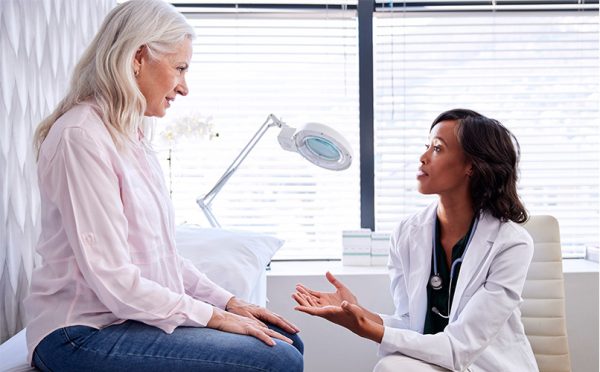
Women are connecting midlife skin changes to perimenopause and menopause and bringing their questions to aesthetic providers. Here is what clinical experts say, what the evidence shows and where it runs out.
“One day my face just fell apart.” New York dermatologist Doris Day, MD, told NewBeauty that she hears comments like this from women who may be in perimenopause. Others ask why their skin has become dry and itchy, or why they are having breakouts again.
Menopause and aesthetics have long been treated as separate conversations. That is changing quickly. In October alone, the American College of Obstetricians & Gynecologists (ACOG) issued its most comprehensive menopause guidance to date, The Menopause Society held a plenary on skin and hair changes, the FDA approved new labeling for three more hormone therapy products, and Galderma and Revance each released new survey data.
The conversation has reached aesthetic medicine directly. In a 2026 viewpoint in Facial Plastic Surgery & Aesthetic Medicine, facial plastic surgeon Lindsey Pennington, MD, OB-GYN Mary Claire Haver, MD, and dermatologist Sabrina Fabi, MD, wrote that many women sense something has changed, but “they just haven’t found a provider who can name it.”
Why does menopause matter to medical spas?
Women account for 89% of medical spa patient visits, according to AmSpa’s 2024 Medical Spa State of the Industry Report. Among female patients, 54% are ages 35 to 54 and another 24% are 55 or older. The report also found that 69% of medical spas are majority female-owned.
The report tracks age, not menopausal status, so those figures do not show how many patients are in either stage. According to the viewpoint, perimenopause typically occurs from the late 30s to the early 50s and involves fluctuating hormones and irregular cycles. Menopause is defined as 12 months without menstruation, and the average age is 49.9, according to ACOG’s guideline.
What do women want from aesthetic providers during perimenopause and menopause?
Two manufacturer surveys released this fall point in the same direction.
- Revance: In a survey of 1,279 women conducted with NewBeauty’s BeautyEngine, 74% said they became more interested in aesthetic treatments after entering perimenopause or menopause. In addition, 85% said it is important that their aesthetic provider understands these stages, and 68% liked the idea of receiving aesthetic and hormone care in one practice.
- Galderma: In a survey of 5,090 women in the U.K., U.S., Brazil and China, 56% first attributed menopause-related skin changes to aging, while 29% connected them to menopause. And 62% said they had felt overwhelmed by skin care advice during this stage.
These findings need context. Both companies sell aesthetic products. BeautyEngine draws on NewBeauty’s aesthetics-focused consumer community, and an earlier Galderma survey included only women who had undergone or were open to treatment.
As dermatology nurse practitioner Amanda Caldwell, MSN, APRN-C, wrote in Dermatology Times, “the distress is rarely vanity.”
How does menopause affect the skin?
Caldwell writes that estrogen plays a central role in collagen synthesis, epidermal thickness, hydration, wound healing and immune regulation. The most-cited estimate is that collagen drops by up to 30% in the first five years after menopause, followed by about 2% per year. That estimate traces back to research from the 1980s, and it describes a population, not an individual patient.
What perimenopause symptoms are dermatology clinicians seeing?
Caldwell’s article focuses on perimenopause. She calls it not a dermatologic diagnosis, but a transition with skin effects that clinicians can recognize. The table below is limited to what she describes for dermatology clinicians. Some of the underlying data she cites comes from postmenopausal women.
What aesthetic options do experts discuss for perimenopause?
Pennington, Haver and Fabi call perimenopause a tipping point for facial aging and describe it as a window for early intervention. This is their clinical viewpoint, not a trial. Among nonsurgical options, they discuss:
- Medical-grade skin care: Prescription retinoids, antioxidant serums, broad-spectrum mineral sunscreen, barrier moisturizers and peptides.
- Poly-L-lactic acid: They cite studies of its effects on collagen, elastin and dermal thickness. They also note a survey in which surgeons reported scarring in facelift patients with prior biostimulator use, along with a study reporting minimal scarring when properly administered.
- Neuromodulators: Used for dynamic lines. The authors say emerging evidence suggests a possible role in dermal remodeling.
- Energy-based devices: Radiofrequency, fractional CO2 and erbium lasers. They call CO2 resurfacing the gold standard, with a long recovery period and more complications.
The authors call for longitudinal research on combining hormone therapy with surgical and nonsurgical procedures. Pennington and Fabi disclose industry relationships with companies including AbbVie and Galderma, and Haver discloses roles with The ‘Pause Life and MIDI Health.
What does the evidence say about aesthetic treatments for menopausal skin?
A roundtable in the Journal of Cosmetic Dermatology, featuring two dermatologists, a gynecologist and a facial plastic surgeon, summarized the evidence by treatment category for perimenopausal and menopausal patients:
- Topical retinoids: Multiple randomized trials and a meta-analysis, with irritation as a limitation.
- Biostimulators: Randomized and split-body trials of poly-L-lactic acid, which the panel called a promising option for dermal thinning and facial volume loss.
- Hyaluronic acid injectables: A retrospective cohort and case series.
- Energy-based devices: Systematic reviews, randomized trials and expert consensus.
- Exosomes: The panel noted a lack of further well-controlled studies and no FDA-approved products.
That roundtable was supported by educational grants from AbbVie and Galderma, and some authors disclosed industry relationships. A 2025 narrative review reported that few aesthetic studies analyze data by menopausal status or hormone therapy use, and it described estrogen-deficient skin as having no formal treatment indication.
Galderma says it will record menopausal status in its injectable aesthetics trials. In October, it also reported results from a company-supported, investigator-initiated trial in menopausal women: Facial dermal thickness rose 27.3% when Restylane Skinboosters preceded Sculptra, compared with 15.7% in the reverse order. (Skinboosters line have not been approved in the United States.)
Why don’t treatments seem to last as long during perimenopause and menopause?
Among women who had received aesthetic treatments, more than one-third told Revance that treatments work less effectively than they did before perimenopause or menopause. Nearly half said results do not last as long. Those figures reflect patient reports.
The viewpoint authors write that many women develop skin that bruises more easily and heals slowly after procedures, and that early, hormone-aware intervention may improve aesthetic durability. They frame that as a possibility and call for more research. Because few aesthetic studies analyze results by menopausal status, these sources do not show how much treatment response changes, or for which treatments.
What changed with the FDA’s hormone therapy warnings?
Hormone therapy’s regulatory history helps explain why many patients still have questions about it. Boxed warnings were added to estrogen products beginning in 2003, after the Women’s Health Initiative. In November 2025, the FDA began removing boxed language on cardiovascular disease, breast cancer and probable dementia, and nine products have updated labels so far.
The change is partial. The FDA is retaining the boxed warning on endometrial cancer for systemic estrogen-alone products, and the decision remains debated. For the full timeline, see our history of hormone therapy regulation.
Does hormone therapy improve skin?
Experts do not fully agree.
- Reported benefits: The viewpoint authors write that systemic and topical hormone therapies have been shown to meaningfully affect skin quality. The Journal of Cosmetic Dermatology panel named hormone therapy and topical estrogen among the most effective interventions for hormone-related skin changes.
- Cautions: A 2026 article in the journal Menopause says hormone therapy may improve skin changes but that using it solely for that purpose is not recommended. A separate review says it is not indicated for skin and hair symptoms alone. A 48-week randomized trial of low-dose hormone therapy found no significant change in mild to moderate age-related facial skin changes.
The FDA-approved uses of menopausal hormone therapy are vasomotor symptoms, vulvovaginal atrophy or genitourinary syndrome of menopause and, for some products, osteoporosis prevention. ACOG’s new guideline strongly recommends systemic hormone therapy for vasomotor symptoms and related sleep disturbance in patients without contraindications, with initiation before age 60 or within 10 years of natural menopause. It calls for a shared decision-making discussion of each patient’s symptoms, history and baseline risks.
Topical estrogen raises separate questions. The viewpoint describes minimal systemic absorption with topical use, while the Journal of Cosmetic Dermatology roundtable lists limited safety data on systemic absorption and notes it is not FDA-approved for anti-aging.
Formulation is also part of the discussion. AmSpa’s report found that 24% of medical spas offer hormone replacement. ACOG’s 2023 clinical consensus says compounded bioidentical hormone therapy should not be prescribed routinely when FDA-approved formulations exist, and that clinicians should educate patients who request it on its lack of FDA approval and the risks specific to compounding.
How do GLP-1s change the picture?
Half of medical spas offer medical weight loss, according to AmSpa’s report. In a Revance-sponsored NewBeauty article, dermatologist Lesley Clark-Loeser, MD, said many women are experiencing menopause and weight loss at the same time, and that significant or rapid facial fat loss can make menopausal changes appear more pronounced.
Research presented at The Menopause Society’s 2026 meeting linked hormone therapy to modestly greater weight loss on semaglutide: about 11% at one year, compared with 9.5% for semaglutide alone. Findings presented at medical meetings are considered preliminary, and lead author Regina Castaneda, MD, cautioned that “weight loss is not an indication for menopause hormone therapy.”
What do experts say aesthetic providers can do?
Experts in this space point to several practices:
- Ask about more than skin. The viewpoint authors encourage intake forms that ask about sleep, libido, mood and menstrual history. Day told NewBeauty she connects skin concerns with changes in sleep, mood, joints and cycles.
- Collaborate with menopause clinicians. The viewpoint encourages collaboration with menopause specialists when appropriate. Caldwell calls collaboration with primary care or gynecology essential for moderate to severe vasomotor symptoms, sleep disruption or genitourinary syndrome of menopause.
- Revisit plans over time. The viewpoint authors suggest follow-ups every six to 12 months as patients move toward menopause.
AmSpa’s data shows why collaboration may matter: 4% of medical directors in the report are OB-GYNs, and 55% of medical directors work part-time.
Menopause education remains a broader gap. In a survey of 150 physician assistants, 97% said their training was inadequate.
Meeting patients where they are
Menopause is a normal stage of life, and as NewBeauty’s reporting notes, not every woman needs aesthetic treatment. The viewpoint authors make a broader point: Aesthetic care and a patient’s emotional experience cannot be separated, and asking about estrogen status can help patients feel seen.
AmSpa members can find state-specific guidance in our Medical Spa Laws resources and templates in Forms, Consents & SOPs. This article is for educational purposes and is not medical or legal advice.
