Cold Laser Therapy: The Science and Uses for Med Spas
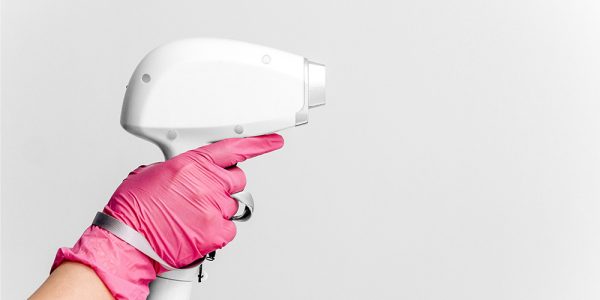
Most aesthetic energy treatments work by causing a controlled injury and letting the body repair it. Cold laser therapy, known in the research as photobiomodulation, takes a different route: it uses light to change how cells behave, with no injury at all.
On a recent episode of Medical Spa Insider, AmSpa founder and CEO Alex Thiersch spoke with Dr. Graeme Glass, a consultant craniofacial and plastic surgeon at Great Ormond Street Hospital in London and a researcher with a PhD from Imperial College London. His doctoral work looked at how inflammatory mediators influence stem cells. Dr. Glass is also aesthetic director for a company that makes a near-infrared laser device. This article sets products aside and focuses on the science he explained and what it means for aesthetic practices.
Dr. Glass first looked closely at photobiomodulation during the COVID lockdown. His patients kept asking what they could do at home before and after surgery to help their own recovery. He wanted something he could recommend that would help and, as he put it, “crucially from my point of view, not make things worse.” He ended up reading hundreds of papers on the subject.
How photobiomodulation works
Photobiomodulation turns light energy into chemical energy inside the cell. Dr. Glass described the process in four steps:
- Light is absorbed in the mitochondria. An enzyme in the mitochondria, cytochrome c oxidase, absorbs red and near-infrared light. Dr. Glass called the mitochondria “the battery pack of the cell.”
- The cell makes more energy. Absorbing that light speeds up production of ATP, the molecule cells use for energy.
- Gene expression shifts. “A cell in a high-energy state expresses a different set of genes from a cell in a low-energy state,” Dr. Glass said. In his view, cells in this state express more genes linked to regeneration and fewer linked to senescence and aging. Lab studies show light exposure can shift gene expression in skin cells, but how that translates into visible results in patients is still being studied.
- Inflammation goes down. Research reviews report that photobiomodulation lowers pro-inflammatory cytokines such as TNF-alpha, IL-1 beta, and IL-6, though most of that evidence comes from cell and animal studies.
With repeated exposure, Dr. Glass said, skin cells begin to behave more as they did in a person’s early twenties. That is his reading of the research rather than an outcome measured in clinical trials. “You’re essentially reproducing a recipe for youthfulness and rejuvenation,” he said. “And there’s nothing inflammatory about it. That’s the key.”
The idea isn’t new. The field traces back to 1967, when Endre Mester at Semmelweis University in Budapest found that a low-power ruby laser (red light at 694 nm) sped up hair regrowth in mice. Researchers could see effects like this but couldn’t yet explain them. Dr. Glass noted that much of this early work happened behind the Iron Curtain, and that researchers worldwide pieced together the mechanism over the following decades. Research output has grown rapidly through the 2020s.
Repair vs. rejuvenation
Dr. Glass draws a firm line between two ways of improving skin.
Repair is the model behind most of today’s treatments. High-energy lasers, microneedling, and radiofrequency all cause an injury first. The injury triggers a pro-inflammatory response, and that response drives repair. “Most of the current industry is predicated on the idea that you first have to cause damage in order to induce repair,” he said.
The catch, in his view, is that repair produces scar tissue, a blend of type I and type III collagen. Every patient forms a different ratio, which affects the quality of the result. Injury-based treatments such as fractional lasers and microneedling have a strong evidence base; Dr. Glass’s point is that individual healing responses vary. “There is no ready means of establishing how your body is going to react to that damage,” Dr. Glass said. Evolution favors fast healing, he added, not the most attractive scar. So a provider causes the injury and then has to “sit back and wait and hope that the repair process is going to give you a net benefit.”
Rejuvenation, in his framing, is what photobiomodulation does. It isn’t a repair process at all. Because it is anti-inflammatory, it encourages tissue to behave the way it did at its youthful prime, without the uncertainty of a wound-healing response. It also avoids the pain and downtime that come with injury-based treatments.
Laser vs. LED: does more than wavelength matter?
Many patients already use red-light LED masks and panels at home, so this distinction comes up often. Both LEDs and lasers can produce near-infrared light at a chosen wavelength. Dr. Glass argues that wavelength isn’t the whole story.
He noted that much of the early research used lasers, which were long assumed to be too expensive for consumer use. LEDs were cheaper and could be made to emit near the same wavelength, though over a broader band than a laser. In his view, the industry assumed “the only thing that was important about the light was the wavelength” and overlooked how the light is delivered.
His argument rests on what happens to light at the skin:
- Reflected light does nothing. The red glow on skin under an LED panel is light coming back out of the skin, which isn’t being absorbed.
- Absorbed light does the work. Only light that travels into tissue and reaches cytochrome c oxidase drives the effect.
- Laser light may travel deeper. Laser light is coherent, meaning its waves are in phase. Dr. Glass said this lets it carry energy deeper into tissue, while LED light loses much of its energy. Many researchers dispute this; see below.
He doesn’t dismiss LEDs. Blue light has been shown to act against acne-causing bacteria, he said, and red and near-infrared LEDs likely affect the epidermis. Short-term flushing can also make skin look fresher for a few hours. “It’s not that it does nothing,” he said. “It just wasn’t as good as the evidence suggested that it could be.”
Where the debate stands: Whether coherence matters in tissue is still contested. A widely cited 2018 review by Heiskanen and Hamblin, Photobiomodulation: lasers vs. light emitting diodes?, notes that lasers dominated the field for about 40 years. It also notes that LEDs have become common for their safety, ease of home use, and ability to treat large areas, and concludes that “LED photobiomodulation is here to stay.” Providers should look at the published data behind any specific device, whatever its light source.
The physics is debated too. Some researchers argue that scattering in skin breaks up a laser’s coherence within the first layers of tissue, and that penetration depends mainly on wavelength and power density. The warmth of LED panels comes mostly from the diodes themselves, which convert only about 20–30% of electricity into light, not from light waves canceling out. The same review found most laser-vs-LED comparisons had a high risk of bias, and that the evidence so far provisionally suggests LEDs can replace lasers without significant loss of results.
On the other side, Dr. Glass’s own preliminary study exposed donor skin to an 808 nm laser and a matched 810 nm LED. The laser changed the expression of 45 of 107 genes measured; the LED changed one. The study used skin from a single donor, and the authors call for further research.
Dose matters: the biphasic response
More light isn’t always better. Photobiomodulation follows what researchers call a biphasic dose response. Benefits rise with exposure up to an optimal point, then level off, and at very high doses the effect starts to decline.
The key measure is fluence, the energy delivered per area of tissue. Dr. Glass said well-designed devices are calibrated to the optimal fluence suggested by preclinical and clinical studies. Used as directed, he said, it would take exposure “way, way, way over” that level to reach the declining side of the curve.
For providers, the lesson is to ask how a device’s dose was chosen and to follow protocols closely.
Where photobiomodulation fits in an aesthetic practice
Dr. Glass sees photobiomodulation as a complement to existing treatments, not a replacement. In his surgical practice he still uses ablative and non-ablative lasers. “If you choose the right procedure or the right device for the right patient and in the right context, you get good results,” he said. A CO2 laser remains the choice when the goal is resurfacing.
He described several ways it can fit into a practice:
- Recovery after resurfacing and other procedures. Dr. Glass has his patients use near-infrared laser therapy after high-energy laser treatments. He said his patients report less pain, swelling, and bruising, which he attributes to a calmer inflammatory response. This is his clinical observation, not published trial data. His team published early data on near-infrared laser and wound healing in Aesthetic Surgery Journal Open Forum (Glass et al., 2025), a preliminary study of 20 patients with chronic wounds plus lab tests on donor skin. Wounds treated with the laser shrank by an average of 78%, and 4 of 10 healed fully, while 8 of 10 standard-care wounds showed no change. Dr. Glass and one co-author disclosed that they are shareholders in the device’s maker, which also funded the lab portion. The study did not look at recovery after resurfacing.
- Before and after surgery. Patients who want to take part in their own recovery have an option to use at home, though clinical evidence for this use is still early.
- An in-clinic treatment experience. Treatment in a spa or clinic is a different experience from home use, he said. A provider can use two handheld devices at once, as part of a broader skincare protocol.
- Retail and home-care programs. Dr. Glass doesn’t see home devices as undercutting med spas. Home use requires consistent, hands-on effort, and in-clinic care offers more than a single device can.
He also expects skeptics. Some people won’t be moved by evidence or testimonials, he said, but “can very often be swayed by a single experience of their own.”
Questions to ask before adding a device
Dr. Glass’s central message was that products should be built on peer-reviewed clinical evidence, not on commercial potential. Practices can apply the same standard when evaluating any photobiomodulation device:
- What is the light source and wavelength? Is it a laser or an LED, and what wavelength does it emit?
- What dose does it deliver? How was the fluence chosen, and does it match the doses used in published studies?
- What clinical evidence supports this device? Ask for peer-reviewed human studies of the device itself, not only general research on the technology or lab-only (in vitro) data.
- What is its regulatory status? Confirm the device’s FDA status and what it is cleared to treat.
- How does it fit your current services? Consider whether it supports recovery after procedures, adds an in-clinic treatment, or works as a retail or home-care offering.
- What training and protocols come with it? Make sure staff know how to use it as directed and set realistic expectations with patients.
Listen to the full episode
Hear Alex Thiersch’s full conversation with Dr. Graeme Glass, The Science of Cellular Rejuvenation, on Medical Spa Insider, or watch it on YouTube.