Regenerative Aesthetics Is Evolving. Are You Keeping Up?
For medical spa professionals paying close attention, the signal has been clear for several years now. Aesthetics is no longer defined by how effectively we correct what time has taken away. It is being redefined by how well we understand biology, cellular aging, and the body’s ability to regenerate itself.
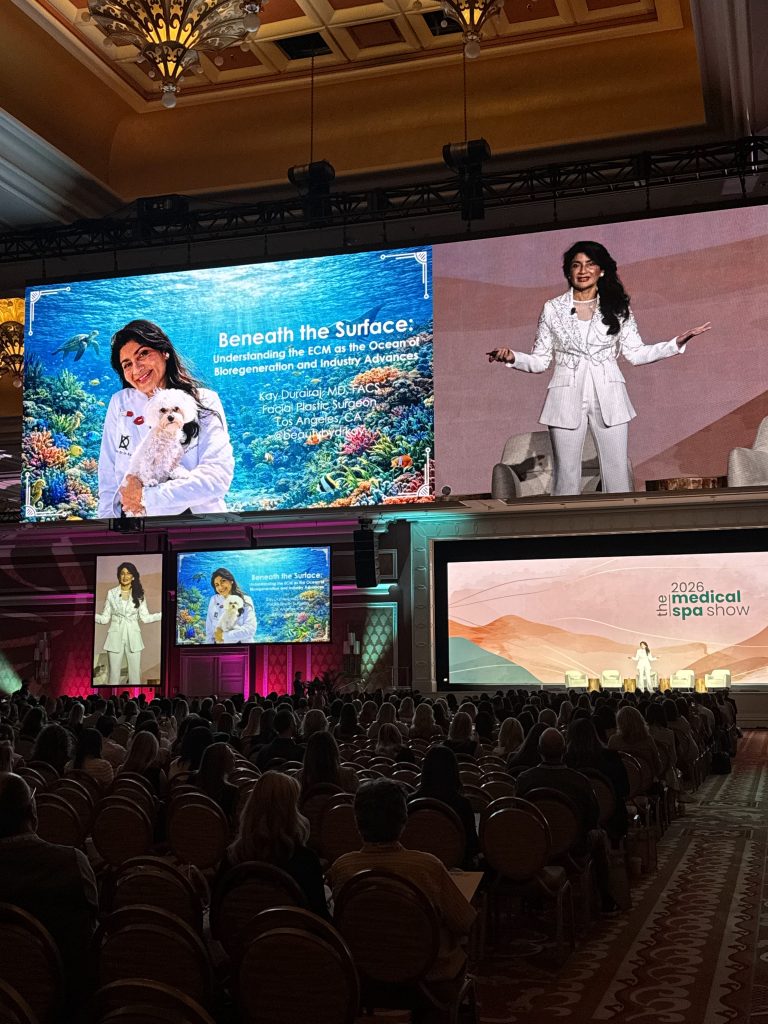
Few educators have been more instrumental in shaping that conversation than Dr. Kay Durairaj, who for the third consecutive year designed and led the Regenerative Medicine education track at the Medical Spa Show. Her message has been consistent, and increasingly urgent: the future of aesthetics belongs to providers who understand regeneration not as a buzzword, but as a clinical framework.
“It’s not about looking young anymore,” she noted during an onsite conversation at MSS 2026. “It’s about wanting to feel so good inside and make that last.”
That shift in mindset explains why regenerative medicine has moved from fringe interest to standing‑room‑only lecture halls.
From Aesthetic Correction to Biological Strategy
Traditional aesthetic medicine has always been reactive. Lines appear, volume shifts, skin quality declines, and treatments are deployed to correct those changes. Regenerative aesthetics turns that model inside out. The goal is no longer short‑term improvement. It is long‑term tissue health.
At MSS, this philosophy was not framed as theory. It was presented as a roadmap for practices that want to stay relevant as patients become more educated, more proactive, and more invested in longevity.
“People aren’t willing to wait to deteriorate anymore,” Dr. Kay explained.
That impatience is not cosmetic. It reflects broader cultural awareness around metabolic health, inflammation, senescence, and preventative care. Patients want to know why their skin is changing, why their recovery is slower, why weight loss affects their face, and what can be done upstream.
Regenerative aesthetics answers those questions by focusing on structure, cellular communication, and biologic sustainability.
Biohacking Needs Medical Supervision
The rise of biohacking has complicated this transition. Patients arrive asking about peptides, longevity stacks, and protocols they discovered online. The demand is already there. What has been missing is consistent medical leadership.
“We are the medical providers,” Dr. Kay said plainly. “We should be doing these things for our patients.”
Her concern is not with innovation, but with recklessness. Peptides and regenerative compounds are powerful tools, but they are not lifestyle supplements. Without appropriate knowledge, dosing strategy, and clinical context, they can create unnecessary risk.
“There’s a scarcity of people who really know what they’re doing,” she added.
That gap, she warned, will not remain unfilled by regulators forever. The opportunity for medical spas is to claim this territory responsibly, while it can still be shaped by providers rather than restricted by enforcement.
The Case for Metrics, Not Anecdotes
One of the strongest throughlines in Dr. Kay’s teaching is accountability. Regenerative medicine cannot rely on before‑and‑after photos alone. It demands measurement.
“There are hundreds of thousands of people using BPC‑157 right now,” she pointed out. “So we’re all the test generation.”
That reality places a burden on providers. If regenerative therapies are being offered without biomarkers, without longitudinal tracking, and without defined endpoints, the industry risks losing credibility.
“You can’t just prescribe something and say it’s working,” she said. “You really have to have metrics.”
This insistence on data shows up repeatedly in the Regenerative Medicine track at MSS, where education focuses not just on what is new, but on how to document outcomes, protect licensure, and practice within a defensible medical framework.
“Protect your license first and foremost,” Dr. Kay cautioned.
Treating Aging at the Cellular Level
Perhaps the most paradigm‑shifting aspect of regenerative aesthetics is its reframing of aging itself.
“The next phase of aesthetics is reversing senescence,” Dr. Kay said. “Aging is a disease. We have to start treating it like that.”
This is not metaphor. Advances in cellular science now allow providers to influence fibroblast behavior, inflammatory signaling, and extracellular matrix integrity. Regeneration is no longer aspirational. It is mechanistic.
“You can take a fibroblast that’s 50 and turn it back into a 20‑year‑old fibroblast,” she explained.
For aesthetic providers, this changes how skin quality, laxity, and volume loss are understood. What was once addressed with replacement is now increasingly supported through stimulation and preservation.
Structural Support in the Era of Weight Loss Medications
This regenerative lens has become especially relevant as GLP‑1 medications reshape patient bodies and faces simultaneously. Rather than reacting to facial volume loss after the fact, regenerative strategies work to protect tissue health in advance.
“If we maintain and support the facial fat pads, no Ozempic face,” Dr. Kay said.
By prioritizing collagen integrity and vascular support, practices can help patients lose weight without sacrificing facial structure. This approach reflects a deeper understanding of longevity aesthetics.
“The new collagen molecule has a half‑life of ten years,” she noted, describing why long‑term thinking matters.
For many providers, this science triggers a complete recalibration of how faces are treated.
“This led to a whole paradigm shift in how I treat faces,” she said.
Innovation Comes With Responsibility
Innovation without discipline invites scrutiny. Dr. Kay has been clear that scientific discourse belongs in professional settings, not viral sound bites.
“That discussion belongs in an auditorium, a lecture hall, where data, science, and facts can be presented.”
The risk of public missteps is not abstract.
“You could destroy 20 years of credibility in one year,” she warned. “If we don’t do this right, the regulations will come down fast.”
That message resonates strongly in the regenerative track at MSS, where education consistently emphasizes ethical practice, regulatory awareness, and scientific humility.
Why the Regenerative Medicine Track at MSS Matters
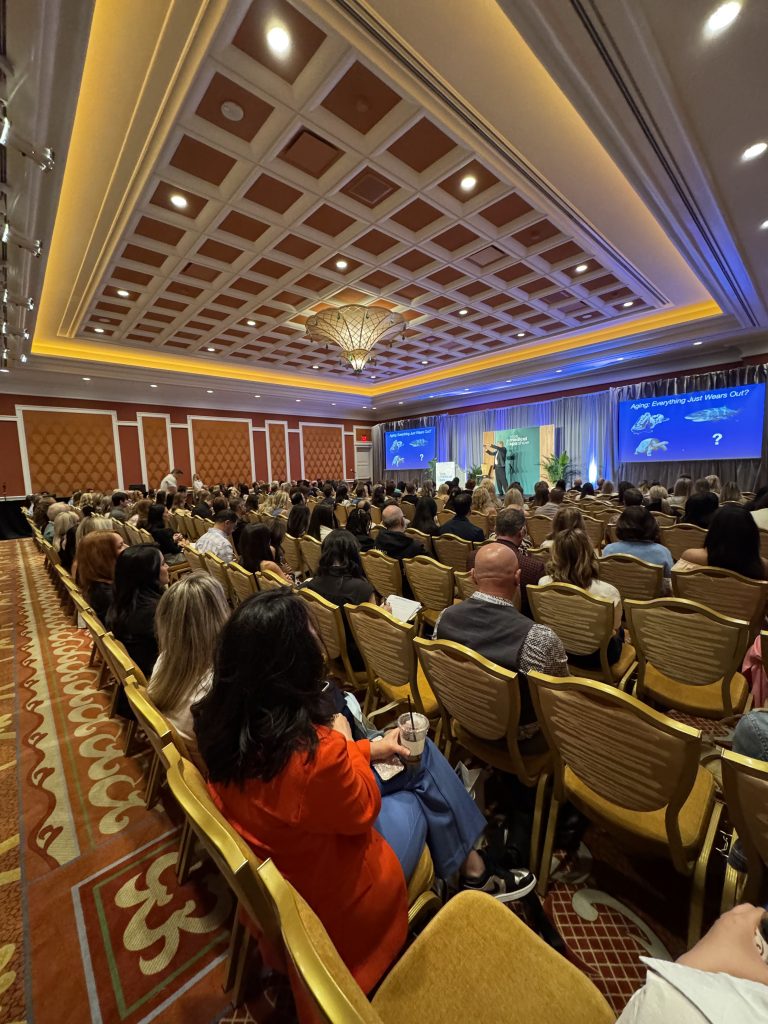
The Regenerative Medicine track at the Medical Spa Show did not happen by accident. Dr. Kay built it deliberately, and she has refined it year after year as the science has evolved. Today, it stands as one of the most comprehensive educational forums for providers who want to integrate regenerative thinking into real clinical practice.
“Peptides are incredibly powerful molecules,” she said. “This is not going away.”
The question for medical spa professionals is not whether regenerative aesthetics will shape the future. It already is.
“This is the real thing we need to do to change the trajectory of how we age,” Dr. Kay said.
Stay tuned for the full interview with insights from Dr. Kay on AmSpa’s Medical Spa Insider podcast!
For those who were unable to attend in person, the full Regenerative Medicine track, including all lectures and expert panels, is available through MSS Replay. Medical spa professionals can access hours of advanced education covering peptides, biostimulators, cellular aging, longevity strategy, and regenerative protocols by signing up through the Medical Spa Show website.